

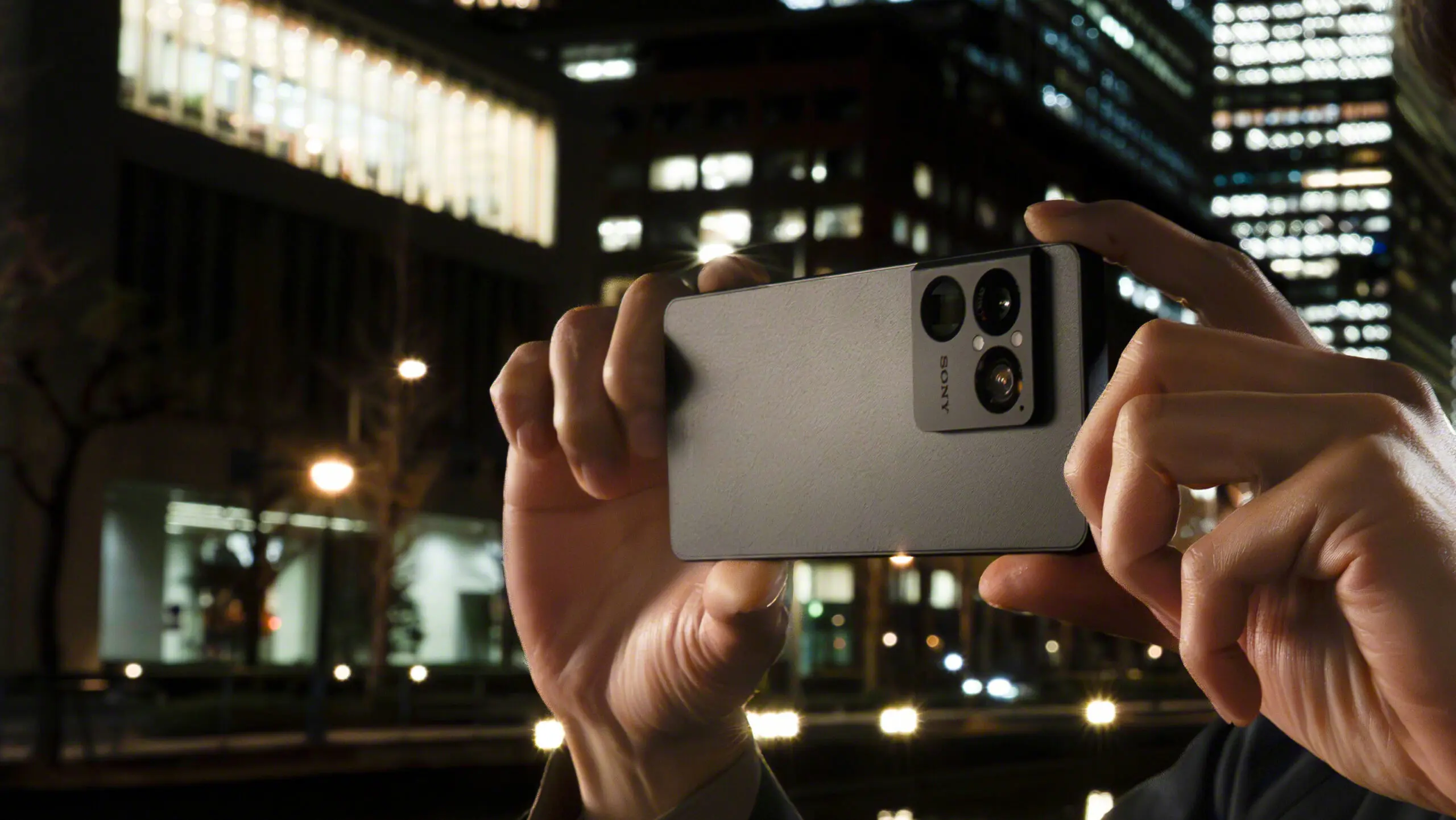
When Sony introduced the Xperia 1 VIII earlier this week, the smartphone came with a host of hardware upgrades, including a redesigned chassis and a much larger telephoto sensor. But the company also placed a heavy emphasis on a new software feature: the AI Camera Assistant. This tool, according to Sony, offers suggestions for more expressive photos by applying different adjustments. However, the promotional campaign appears to have backfired spectacularly, as the side-by-side comparison shots Sony itself provided have sparked widespread mockery online. Instead of showcasing improvement, the AI-assisted images look noticeably washed out and overexposed compared to the originals, leading many to question whether Sony truly understands what makes a great photograph.
The feature in question
The AI Camera Assistant is designed to analyze a scene in real time and propose up to four alternative versions of the shot, each with different tweaks to exposure, color, or composition. Sony markets it as a way to help users "create memorable photos" by moving beyond the default camera settings. On the Xperia 1 VIII product page, the company proudly displays three pairs of before-and-after images, with the AI-processed versions intended to illustrate the feature's creativity. Yet the results are puzzling. In every example, the AI suggestions drain the image of contrast, lift the shadows excessively, and blow out highlights, resulting in a flat, hazy look that few photographers would consider an improvement.
Comparing originals to AI suggestions
The first comparison shows a landscape shot of a city skyline. The original photo has vibrant colors, balanced exposure, and crisp detail in both shadows and highlights. The AI version, however, desaturates the sky, adds a milky haze over the buildings, and loses texture in the clouds. The second pair features a portrait: the original captures natural skin tones with good depth, while the AI edit washes out the face and introduces an unnatural blueish cast. The third example, a street scene, suffers from excessive brightness that hides details in the storefronts and pavements. In all cases, the AI seems to be applying a one-size-fits-all brightening effect that sacrifices contrast and saturation—the very qualities that make photos pop.
Social media reaction
Unsurprisingly, once Sony posted these comparisons on platforms like X (formerly Twitter), fans and tech enthusiasts reacted with disbelief. One user wrote, "Best Anti-AI ads ever, thank you Sony," implying the company is inadvertently demonstrating why AI should not replace human judgment. Another commented, "If Sony, yes THAT Sony, doesn’t know what a good photograph looks like, then we’re definitely cooked as a society." A third added, "What the heck is going on with Sony? Who even approved this post? The AI photos look insanely bad." The mocking tone reflects a deeper frustration: Sony has a storied legacy in imaging technology, from its Alpha mirrorless cameras to its professional cinema line. For such a company to produce—and proudly display—images that most amateurs could improve with a simple tap in a photo editor is seen as a serious misstep.
The irony of AI in photography
The backlash also touches on a broader tension in the smartphone industry. AI-driven photo enhancement has become standard, with brands like Google, Apple, and Samsung using computational photography to achieve impressive results in challenging conditions. However, those companies typically fine-tune their algorithms to preserve naturalness and avoid overprocessing. Sony's approach, at least based on these examples, seems heavy-handed and lacking in nuance. The AI Camera Assistant may be trying too hard to emulate a "creative" style—perhaps one that mimics high-key or overexposed looks—but that style is neither universally appreciated nor suited for every scene. The gulf between what Sony considers expressive and what the public considers beautiful shows that AI still struggles with subjective aesthetic preferences.
Historical context: Sony's mobile camera struggles
This is not the first time Sony's smartphone photography efforts have drawn criticism. Despite being the world's largest image sensor supplier, Sony has consistently lagged behind rivals in mobile camera software. Its Xperia phones often produce raw, unprocessed images that appeal to enthusiasts who want to edit later, but the average user finds them uncompetitive compared to the polished outputs from iPhones or Pixel devices. The Xperia 1 VIII was supposed to change that narrative with the larger sensor and improved processing. Yet the AI Camera Assistant debacle suggests Sony may still be learning how to balance hardware prowess with software tuning that matches user expectations. The company's insistence on keeping the comparison images live on its product page indicates either stubbornness or a genuine belief that the AI edits are superior—a position that flies in the face of overwhelming public opinion.
Technical analysis of the comparison shots
Let's examine the technical flaws in the AI examples more closely. In the landscape shot, the histogram shows a heavy shift to the right, indicating overexposure. The shadows have been lifted so aggressively that they lose detail—what photographers call "crushed blacks" is replaced by empty gray areas. The color palette becomes cooler and less saturated, robbing the scene of warmth. In the portrait, the AI appears to have applied an auto-exposure correction that brightens the skin but washes out the eyes and hair, reducing dimensionality. The street scene loses local contrast, making the image look flat like an old photograph that has faded. These issues point to an algorithm that is too simplistic: it likely measures the overall brightness and tries to raise it, without checking for clipping or preserving saturation. A more sophisticated approach would use scene recognition to apply selective enhancements, as seen in competing smartphones that handle HDR and tone mapping with finesse.
Implications for Sony's marketing strategy
The marketing blunder also raises questions about Sony's internal vetting process. How did these images get approved? Product pages are usually reviewed by multiple teams including marketing, engineering, and design. It is possible that the team was too close to the feature and failed to see the flaws, or perhaps the images were taken with a specific artistic intent that did not translate to a mainstream audience. Whatever the reason, the damage is done. The Xperia 1 VIII, a phone with significant potential, now has an asterisk against its camera credentials because of a poorly executed promotion. Sony will likely need to issue a statement or provide better examples to salvage its reputation, but the mockery will persist as memes and screenshots circulate.
Lessons for the industry
This incident serves as a cautionary tale for any company using AI in creative fields. Automation can be a powerful tool, but it must be deployed with clear objectives and validated by user feedback. Sony's AI Camera Assistant might actually work well in some scenarios—perhaps when a user wants a dreamy, overexposed look—but those scenarios should be clearly communicated, not presented as universally superior. Transparency is key: users should know what changes the AI is making and have the option to undo or adjust them. Currently, the feature offers suggestions but does not explain why they are considered better. By not providing context, Sony invites skepticism.
Furthermore, the backlash underscores the importance of AI training data. If the algorithm was trained on images that favor high-key styles, it will produce that style even when inappropriate. Sony may need to diversify its training set and incorporate more aesthetic feedback from professional photographers. The fact that a company synonymous with professional imaging (think of Sony's Alpha series and CineAlta cameras) would release such a tool without rigorous quality control is baffling to many enthusiasts.
Conclusion omitted per instructions
As the conversation continues online, Sony has remained silent. The product page still shows the same comparisons, and the Xperia 1 VIII remains available for preorder. Whether the company will update its marketing or quietly improve the AI via software updates remains to be seen. One thing is certain: the Xperia 1 VIII's launch story will be remembered not for its new sensor or design, but for the moment Sony inadvertently proved that AI is not yet ready to replace human taste. The episode adds another chapter to Sony's complicated relationship with mobile photography—a story of technical excellence overshadowed by execution missteps.
Source: Android Authority News