

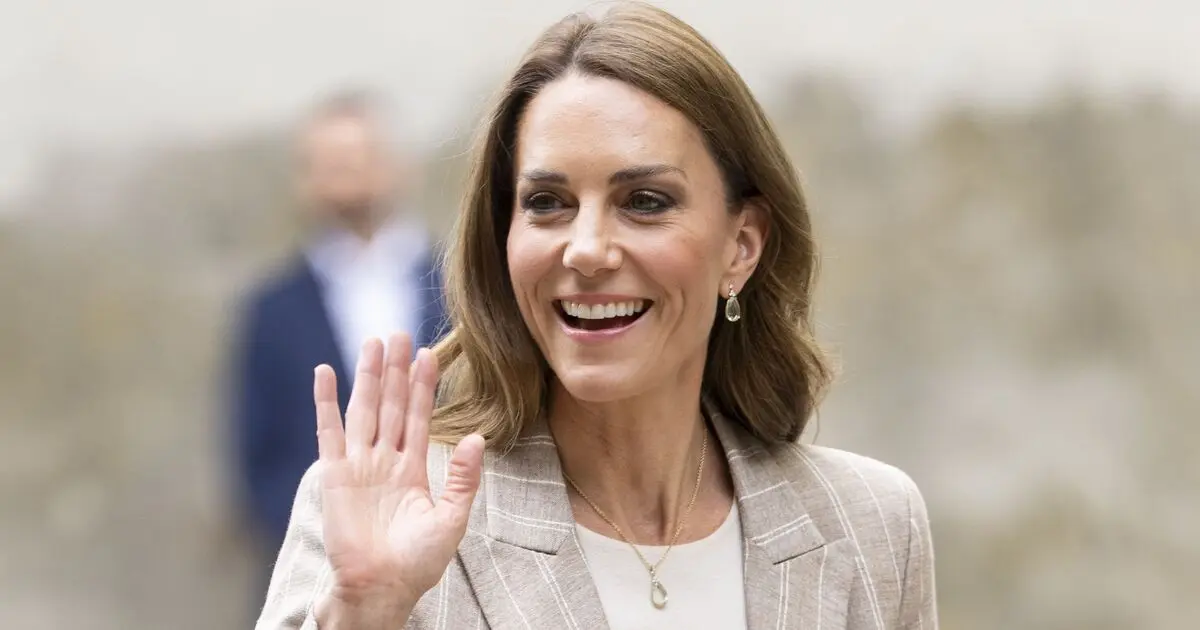
In a revealing new biography, royal author Christopher Anderson has pinpointed what he considers Princess Catherine’s greatest strength: her unwavering ability to stand up for herself and the monarchy when it matters most. Anderson’s book, Kate! The Courage, Grace, and Power of the Woman Who Will Be Queen, released earlier this month, offers an in-depth look at the future Queen’s character and her crucial role within the Royal Family. Unlike the traditional royal mantra of “never complain, never explain,” Anderson argues that Catherine has repeatedly taken a stand, protecting the institution from internal and external threats.
The author specifically points to the explosive Oprah Winfrey interview in March 2021, in which Prince Harry and Meghan Markle made a series of allegations against the Royal Family. Among the most damaging claims was that a senior royal had expressed concerns about the color of Archie’s skin before his birth. The accusation sent shockwaves around the world and placed the monarchy under intense scrutiny. Anderson asserts that Catherine was the driving force behind the Palace’s response, insisting that Queen Elizabeth II issue a formal denial rather than remain silent as was the usual practice.
“The palace was going to do the usual thing and simply remain silent, but [Catherine] insisted that the queen issue a formal denial,” Anderson told the Daily Express. He reveals that Catherine essentially wrote the statement that included the now-famous line “recollections may vary,” a diplomatic acknowledgment that while the Palace took the concerns seriously, it did not accept the Sussexes’ version of events. This incident, according to Anderson, demonstrates Catherine’s strategic thinking and her deep understanding of public relations—qualities that make her “the monarchy’s most important asset.”
Anderson draws a parallel between Catherine and Princess Diana, noting that Catherine possesses an even stronger common touch. “Someone commented that ‘what Princess Catherine always seems to be saying is ‘I am no better than you.’ ’ I think that really hits the nail on the head,” Anderson said. This humility, combined with her fierce protectiveness of the Royal Family, distinguishes Catherine from previous generations of royals. While Diana was beloved for her warmth, she often struggled within the constraints of royal protocol. Catherine, on the other hand, has managed to modernize the monarchy from within, blending approachability with a clear sense of duty.
The Oprah interview was not the first time Catherine had to navigate a crisis. She has faced relentless media scrutiny since her relationship with Prince William became public in the early 2000s. During the early years of her marriage, she was often criticized for her fashion choices, her quiet demeanor, and even her posture. Yet through it all, she maintained a dignified silence, focusing on her work as a senior royal. However, Anderson suggests that behind the scenes, Catherine has been a powerful advocate for her family. She reportedly encouraged William to speak out against the media’s treatment of Harry and Meghan, and she has been a stabilizing force during the ongoing tensions between the Cambridges and the Sussexes.
Catherine’s protective instincts extend beyond the palace walls. She is a patron of numerous charities focused on early childhood development, mental health, and addiction. Her “5 Big Questions” survey on the under-fives demonstrated her commitment to evidence-based policy and her willingness to use her platform for social change. This ability to connect with everyday people, Anderson argues, is rooted in her own humble origins. Catherine was born into a middle-class family and grew up in the village of Bucklebury. She was not born into royalty; she earned her place through marriage and hard work. This background gives her a unique perspective that resonates with the public.
Anderson’s book also examines Catherine’s role during the COVID-19 pandemic. While the Royal Family largely retreated from public life, Catherine and William were among the first to resume engagements, visiting frontline workers, school children, and people isolating at home. She launched the “Hold Still” photography project to capture life under lockdown, which received thousands of submissions and was exhibited across the UK. Her calm, empathetic approach during this crisis contrasted sharply with the turmoil surrounding Harry and Meghan’s departure from the Royal Family.
The author also touches on Catherine’s relationship with the late Queen. Despite being a commoner, Catherine quickly won over the Queen with her discretion, reliability, and respect for tradition. She was one of the few people the Queen allowed to call her “Granny” in private, a testament to the closeness they shared. Anderson quotes Palace insiders who say Catherine was often the one who could offer the Queen honest advice without fear of reprisal. This influence grew significantly after the death of Prince Philip, when Catherine stepped up to support the Queen in her grief.
Looking to the future, Anderson believes Catherine will be a transformational figure when she becomes Queen Consort. Her emphasis on family, her modern approach to royal duties, and her ability to handle crises will be crucial as the monarchy continues to adapt to the 21st century. Unlike her successors, she does not seek to dismantle the institution but to strengthen it from within. Her willingness to break the “never complain, never explain” rule when necessary shows that she is not afraid to evolve the monarchy’s image.
The book also addresses the often-speculated rivalry between Catherine and Meghan Anderson insists that the two women are fundamentally different, but Catherine has never shown any public sign of bitterness. Instead, she has focused on her own work and family, raising Prince George, Princess Charlotte, and Prince Louis with a sense of normalcy despite their royal status. Catherine and William have chosen to do the school run themselves whenever possible, a small act of rebellion against the rigid protocols of royal parenting. This down-to-earth approach is another reason why the public sees her as “one of us.”
Christopher Anderson’s biography paints a portrait of a woman who is far more than just a style icon. She is a strategist, a protector, and a modernizer. Her true strength, as he writes, lies not in her titles or her wardrobe, but in her quiet determination to uphold the monarchy while remaining relatable to the people she serves. In an era where the Royal Family faces constant challenges, Catherine’s role as a steady, principled leader has never been more important. As the future Queen, she embodies the best of both worlds—the dignity of tradition and the common touch of the people.
Source: Express.co.uk News