

)
Trump and Xi Meet in Beijing: A Summit of Hope and Tensions
US President Donald Trump arrived in Beijing on Wednesday evening, May 13, 2026, for a two-day summit with Chinese President Xi Jinping. The visit, his first to China since 2017, was marked by a grand welcome at the Great Hall of the People on Thursday morning. Trump, accompanied by a high-profile delegation of CEOs including Elon Musk, Nvidia’s Jensen Huang, Apple’s Tim Cook, and others, aimed to secure economic wins and navigate a fragile trade truce. The meeting came amid escalating tensions over Taiwan, the ongoing Iran war, and disputes over arms sales.
Red Carpet Welcome and Symbolic Gestures
Xi greeted Trump with a formal ceremony featuring a military band, a gun salute, and hundreds of schoolchildren waving Chinese and American flags. The Chinese leader called for closer cooperation, warning that the world stood at a “crossroads” and urging both nations to avoid the so-called Thucydides Trap — the tendency for a rising power to challenge an established one. Xi stated, “We should be partners, not rivals,” emphasizing that a stable China-US relationship benefits the entire world. In response, Trump praised Xi as “a great leader” and said the two countries would have “a fantastic future together.”
Key Discussions: Trade, Taiwan, and Nuclear Arms
The closed-door meeting overran by 30 minutes, with business leaders stepping out describing the talks as “wonderful.” According to Chinese state media, Xi raised the Taiwan issue as the most critical point in bilateral relations, warning that mishandling could lead to “conflict.” Trump, for his part, indicated he would also discuss the imprisonment of Hong Kong media tycoon Jimmy Lai. Meanwhile, trade officials from both countries had reportedly achieved “positive outcomes” in pre-summit talks in South Korea, leading to China renewing export licenses for over 400 US beef plants — a goodwill gesture.
Trump also proposed a trilateral agreement among the US, China, and Russia to cap nuclear weapons, a move that would replace the expired New START Treaty. The proposal, floated by a senior administration official, reflects Trump’s desire for a “new, improved” arms control framework that includes Beijing.
Visit to the Temple of Heaven
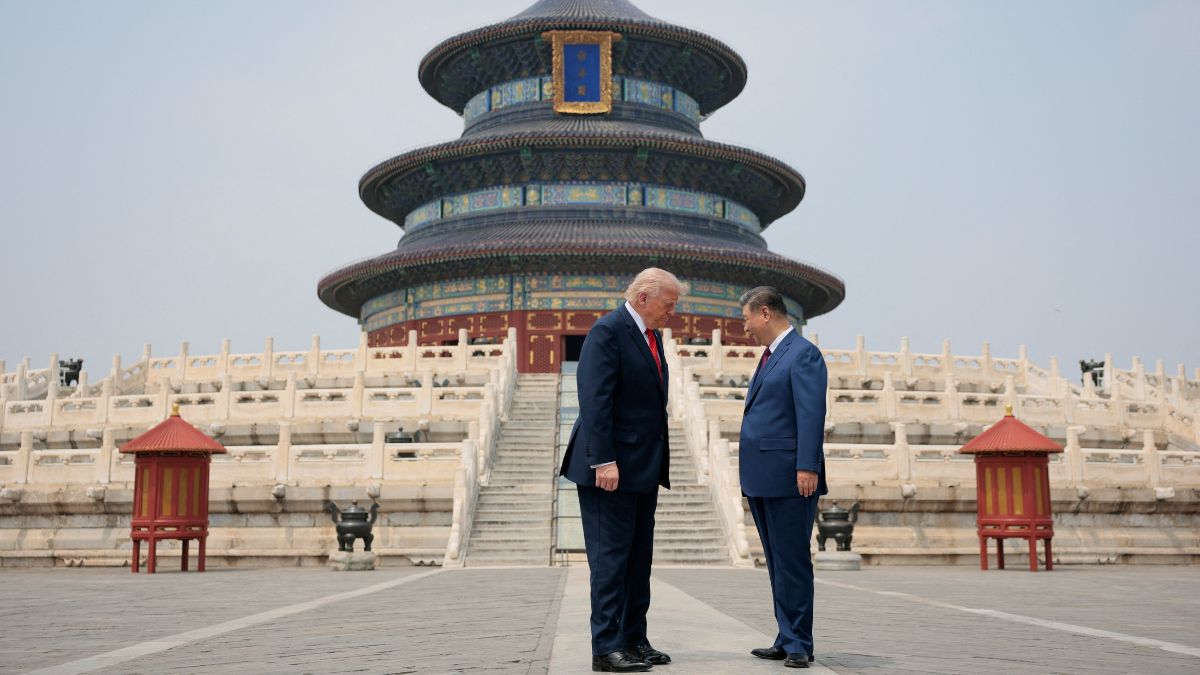
After the bilateral meeting, Trump and Xi visited the Temple of Heaven, a UNESCO World Heritage site in Beijing. Trump became only the second sitting US president to tour the landmark, following Gerald Ford in 1975. The temple, built in the early 15th century, was historically used by Chinese emperors to pray for good harvests. The visit was captured in photographs showing Xi, Trump, and Trump’s entourage, including his son Eric and daughter-in-law Lara. While touring, Trump remarked, “It’s great — a great place. Incredible. China is beautiful.”
Business Delegation and Economic Signals
The delegation of top US CEOs was a central feature of the summit. Trump noted that he asked the world’s top 30 business leaders to join him, and “every single one of them said yes.” He added that they came to “pay respects” to Xi and to expand trade ties. Nvidia’s Jensen Huang boarded Air Force One during a refueling stop in Alaska at Trump’s request. The presence of tech giants like Musk and Huang underscored the high stakes of US-China economic relations, particularly in semiconductors and electric vehicles.
China’s Xi reassured the business delegation that China would “open wider” to the world, promising American companies “even brighter prospects.” This statement was seen as a positive signal amid ongoing trade tensions. The renewal of beef export licenses, which had lapsed for hundreds of US plants, was interpreted as a concrete gesture of goodwill, according to analysts.
Expert Analysis: A Shift in US Strategy?
Some geopolitical experts, such as Professor Sriparna Pathak of Jindal School of International Affairs, suggested that Trump’s demeanor indicated he had accepted China’s victory in the trade war. “He had all the cards when he assumed office but has none today,” Pathak said. She argued that Trump’s behavior — praising Xi and downplaying past confrontations — reflected a defeatist approach, with the US seeking accommodation rather than competition. Others noted that Trump’s proposed “G-2” partnership with China could formalize a power shift in Beijing’s favor.
Reactions from Taiwan and Other Stakeholders
The summit prompted nervous reactions from Taiwan, which relies on US support. Taiwanese Foreign Minister Lin Chia-lung expressed hope for “no surprises” regarding the island’s status. US officials had reportedly reaffirmed “clear and firm support” for Taiwan, but Xi’s blunt warnings during the meeting suggested continued friction. Additionally, the Iran war was another thorny issue, though neither leader publicly detailed their discussions on the conflict.
Schedule and Atmosphere
The first day of the summit included the formal welcome, bilateral talks, a state banquet, and the Temple of Heaven visit. The second day, Friday, features a “friendship photo,” bilateral tea, and a lunch between the two leaders. Meanwhile, Beijing residents lined up outside Trump’s hotel, the Four Seasons, with crowds cheering his arrival. The atmosphere was a mix of pageantry and tension, with China drawing four “red lines” ahead of the visit, including territorial integrity and non-interference.
Overall, the Trump-Xi summit of 2026 is being closely watched for its impact on global trade, security, and alliance structures. While Trump projected optimism, experts remain cautious about whether the meeting will lead to substantive agreements or merely temporary detente.
Source: Firstpost News