

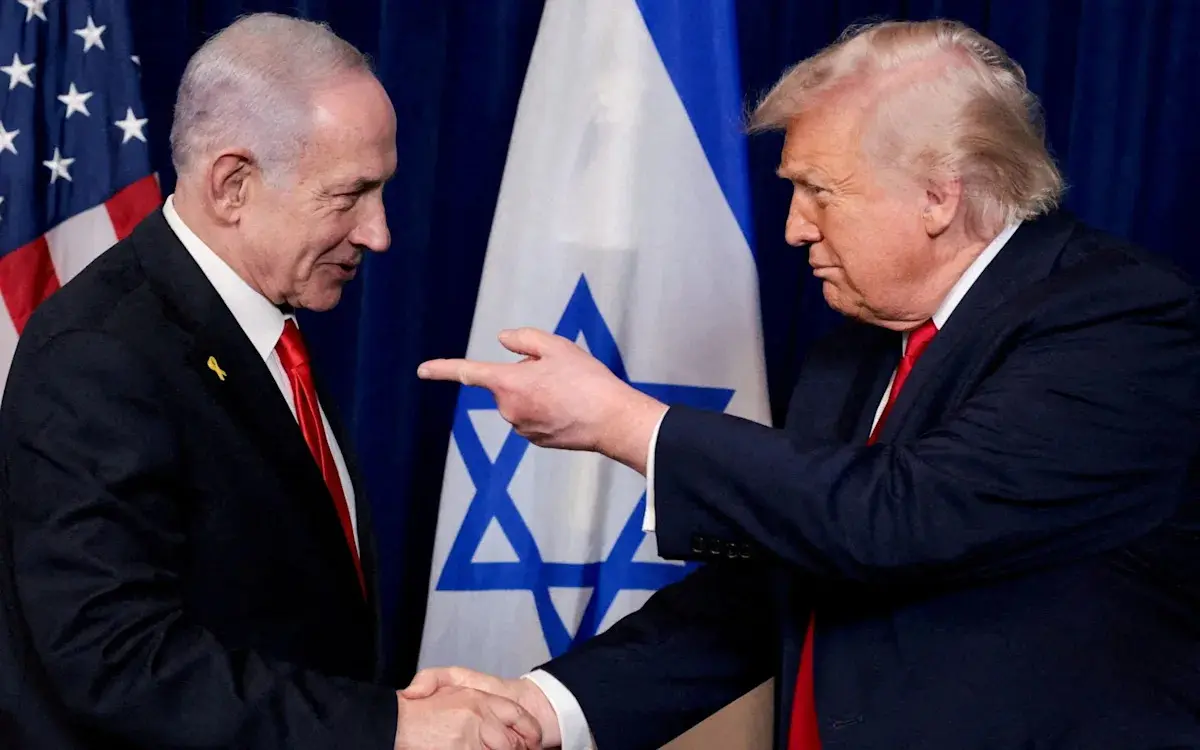
In a newly released book by two New York Times journalists, Donald Trump is reported to have told Israeli Prime Minister Benjamin Netanyahu that "all the Jews are sick of you" during a phone call that included Jared Kushner and Steve Witkoff. The explosive remark, which took place while the group discussed a 20-point Gaza peace plan, underscores the increasingly tense dynamic between the U.S. president and the Israeli leader.
The book, titled Regime Change, was written by Maggie Haberman and Jonathan Swan and has already caused a stir in political circles for its detailed accounts of Trump's second term. The authors claim that the call occurred in late September 2025, as Trump was pressing Netanyahu to accept a comprehensive peace deal aimed at ending the devastating conflict between Israel and Hamas that had raged for nearly two years.
According to the book, Kushner, who served as the U.S. peace envoy, had become deeply frustrated with Israel after it launched an airstrike against Hamas targets in Doha, Qatar. The attack also killed a member of the Qatari security forces, drawing widespread international condemnation. Kushner reportedly told an associate, "I'm f---ing out. The Israelis are crazy," before realizing that the incident could be used as leverage to force Israel to the negotiating table.
Kushner drafted the peace plan and discussed it with Qatar's prime minister, Sheikh Mohammed bin Abdulrahman Al Thani, on the sidelines of the UN General Assembly in New York. Trump then pitched the plan to Netanyahu during the now-infamous phone call. The president reportedly said, "Everybody's sick of you, Bibi. All the Jews are sick of you. Even the two Jews on this call are sick of you," referring to Kushner and Witkoff, who are both Jewish and were on the line.
The heated exchange did not end there. Trump allegedly added, "You can't back out of this. I'm the best friend Israel ever had. Everybody hates you, and I've stood by you. This is a great deal for Israel." Despite the tense conversation, just two days later, on September 29, 2025, Trump and Netanyahu jointly announced the peace plan during a White House press conference. The UN Security Council later endorsed the plan in November.
This incident is just one of many revealing moments in Regime Change. The book also covers sensitive discussions among senior Trump administration officials as they navigated the fallout from the Epstein files and the war in Iran. In one passage, Trump spoke with Netanyahu again in the Situation Room just days before the U.S. launched strikes on Iran in February. Netanyahu reportedly told Trump that Iran was ripe for regime change, a comment that Secretary of State Marco Rubio later dismissed as "bulls---" during a subsequent meeting.
The book has raised concerns within the administration that recordings of conversations in the Situation Room may have been leaked. Axios reported that Trump was "furious about the blow-by-blow accounts." The relationship between Trump and Netanyahu has long been complex. During his first term, Trump was a staunch ally of Israel, moving the U.S. embassy to Jerusalem and brokering the Abraham Accords. However, the war in Gaza that began after Hamas's attack on October 7, 2023, has put immense strain on the alliance. Trump has publicly criticized Netanyahu's handling of the conflict, calling for a swift end to the fighting.
Analysts suggest that Trump's blunt language in the call reflects a broader frustration among U.S. officials with Netanyahu's leadership. The Israeli prime minister has faced domestic protests over his judicial overhaul and corruption trials, as well as international criticism over the high civilian death toll in Gaza. "Trump's remark about 'all the Jews' being sick of Netanyahu is a significant departure from the typical diplomatic language," said Dr. Sarah Cohen, a political scientist at Tel Aviv University. "It signals a major rift, even if they ultimately agreed on the peace plan."
The Gaza peace plan itself is ambitious. It includes a ceasefire, the reconstruction of Gaza, and a path toward a two-state solution. However, its implementation faces enormous hurdles, including the ongoing influence of Hamas and opposition from hardliners in Israel's coalition government. The book's revelations come at a time of heightened sensitivity in U.S.-Israel relations. Trump's second term has seen a more transactional approach to foreign policy, with the president demanding clear outcomes from allies. The reported call suggests that Trump is willing to use personal pressure to achieve his goals, even with a longtime ally like Netanyahu.
For Netanyahu, the incident is a public relations disaster. The Israeli leader has cultivated an image as a statesman who enjoys strong support from American Jews and U.S. presidents. Trump's alleged comments undermine that narrative and could embolden his domestic opponents. "If the report is true, it shows that even Trump, who is often seen as pro-Israel, is losing patience with Netanyahu," said David Horovitz, founding editor of The Times of Israel. "That could have significant consequences for Israeli politics."
The book also describes Kushner's role in shaping the peace plan. As a key architect of the Abraham Accords, Kushner brought his experience in Middle East diplomacy to the table. His frustration with Israel's airstrike in Doha underscores the delicate balance the U.S. must maintain between supporting Israel and preventing regional escalation. The attack in Qatar, which killed a Qatari security officer, strained ties with a country that has served as a mediator in the conflict.
Regime Change has already sparked debate about the ethics of revealing such candid conversations. Critics argue that the book violates the confidentiality of diplomatic negotiations, while supporters contend that it provides necessary transparency about the administration's decision-making process. Regardless of one's stance, the book offers an unprecedented look at how Trump operates behind closed doors.
As the Gaza peace plan moves forward, the world will be watching to see if the tension between Trump and Netanyahu can be overcome. The reported phone call may have been a turning point, forcing both leaders to confront the realities of a war that has claimed tens of thousands of lives and destabilized the region. Whether the peace deal holds will depend on the willingness of both sides to compromise, as well as the continued involvement of international partners like Qatar and the United Nations.
In the meantime, the revelations in Regime Change have added a new layer of drama to an already turbulent political landscape. Trump's blunt language may resonate with his base, who appreciate his no-nonsense approach, but it also risks alienating Jewish voters and allies. For Netanyahu, the challenge is to maintain his standing at home and abroad while navigating a peace process that may require painful concessions.
The full impact of these revelations remains to be seen, but one thing is clear: the relationship between the United States and Israel, once considered unshakable, is entering uncharted territory.
Source: Yahoo News News