

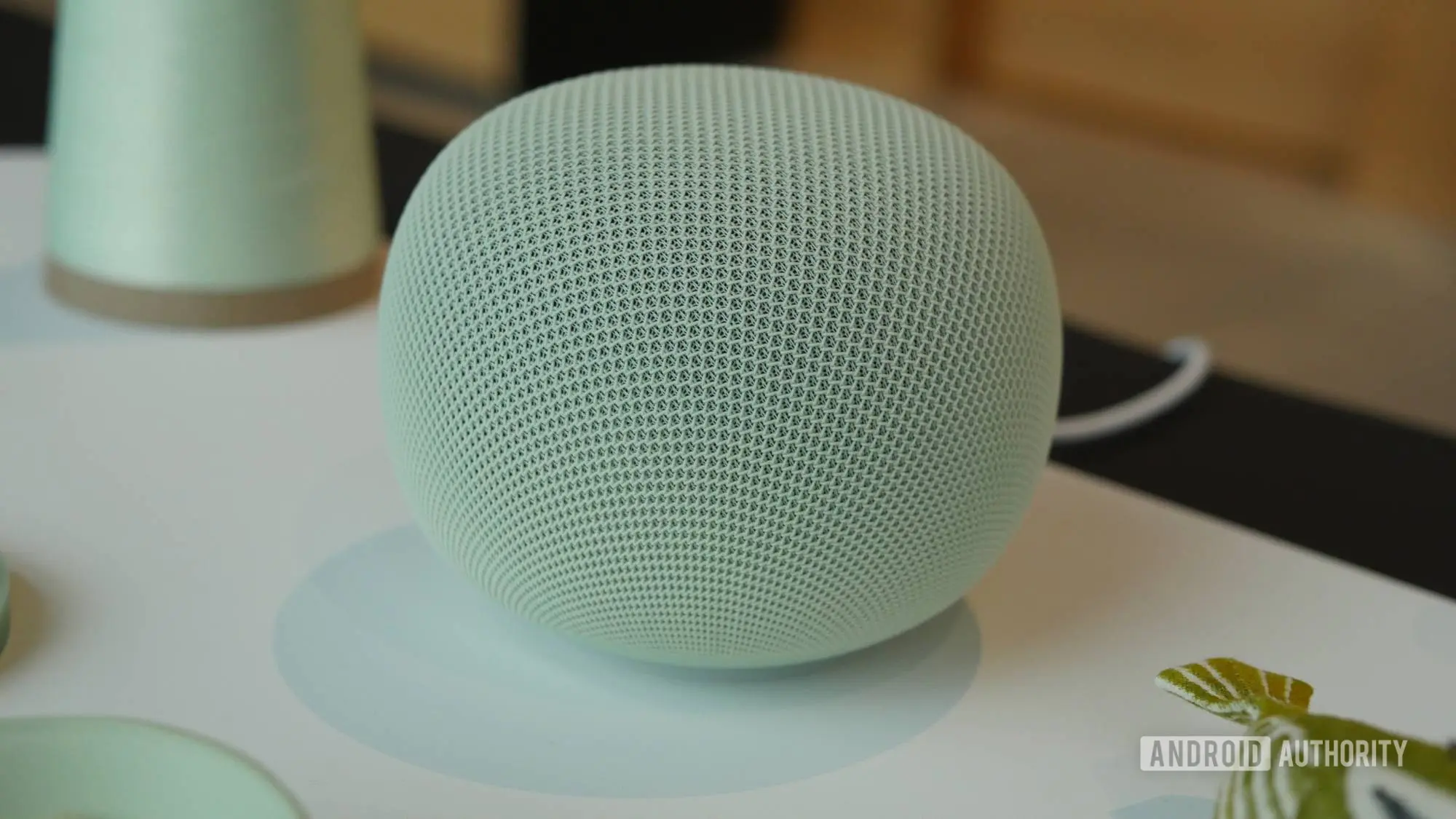
First Impressions of the New Google Home Speaker
In a surprising turn of events, a Reddit user has managed to get their hands on Google's latest smart speaker well before its official release date. The user, who was traveling for work, claims to have spotted the new Google Home Speaker sitting on a shelf at a Walmart store. According to their post, a store associate unknowingly sold them the device, despite it apparently not being scheduled for launch yet. The lucky shopper has since shared their early impressions along with an unboxing video, giving the world a first look at what Google has been working on.
The new Google Home Speaker is the latest addition to Google's smart home lineup, following the original Google Home, Google Home Mini, and Google Home Max. While the design appears to be a refinement of earlier models—featuring a fabric mesh exterior and a compact, cylindrical shape—the biggest surprise isn't the aesthetic or even the sound quality. Instead, it's the permanently attached power cable that has sparked controversy among early observers.
The Non-Removable Power Cable Issue
According to the buyer, the Google Home Speaker comes with a non-removable USB-C power cable that is approximately 5 feet long. The cable connects to a removable 30W power brick, meaning the adapter can be swapped out, but the cable itself cannot be unplugged from the speaker. In their own words, the Redditor described this as a "nightmare for repairability." The attached cable is clearly visible in the unboxing video, and there appears to be no standard USB-C port on the speaker body itself.
This design decision is unusual, especially in an era where USB-C has become a universal standard for charging and data transfer. Most modern devices—from laptops to smartphones to headphones—use detachable USB-C cables, allowing users to easily replace a frayed or damaged cable. By making the cable permanent, Google seems to be prioritizing sleekness or cost savings over long-term usability. While it's possible that the cable could be replaced internally during repairs, that would still require professional assistance and potentially void the warranty. This approach is a step backward compared to the original Google Home, which used a detachable barrel connector power cable.
The issue of repairability is increasingly important to consumers and advocacy groups. The right-to-repair movement has gained momentum in recent years, pushing for devices that are easier to fix and maintain. Permanently attached cables not only make repairs more difficult but also contribute to electronic waste, as a damaged cable can render an otherwise functional speaker unusable. This early revelation has already drawn criticism from tech enthusiasts and sustainability advocates alike.
Sound Quality and Setup
Beyond the cable disappointment, the early impressions of the speaker's audio performance are largely positive. The Redditor, who claims to have experience with professional audio equipment, described the sound quality as better than expected. They noted good midrange and low-frequency performance for a speaker of this size, though they preferred slightly boosting the treble in the audio settings. The speaker reportedly gets fairly loud and delivers enough audio quality that the user plans to make it the main speaker in their living room.
Setup was also said to be straightforward. The user reported that it took less than 10 minutes to get the speaker up and running using an existing Google Home account. The touch controls, which use hidden lights beneath the fabric mesh to indicate volume, were highlighted as a nice touch. Unlike physical buttons, the capacitive controls provide a sleek, seamless look that blends into the speaker's design.
These positive aspects suggest that Google has made significant improvements in audio fidelity compared to earlier models. The original Google Home was often criticized for its muffled sound and lack of bass, while the Home Mini was limited in volume. The new speaker seems to strike a better balance, offering richer sound in a compact package. However, with only one early user's impressions available, it's too soon to draw definitive conclusions.
Design Details and Concerns
While the sound quality impressed, not everything about the physical design earned praise. In addition to the attached cable, the user noted that the fabric mesh covering feels somewhat loose compared to the hard body underneath. This could be an issue with that particular unit, but it raises concerns about long-term durability. Over time, a loose mesh might stretch, tear, or accumulate dust in ways that affect both aesthetics and acoustic performance.
The speaker's overall shape is reminiscent of the Google Home Max, but smaller and more streamlined. It appears to be designed to blend into home decor, with a minimalist look that emphasizes the fabric covering. The hidden touch controls are a clever way to maintain the clean appearance while still offering functionality. However, the loose mesh might detract from the premium feel that Google likely intended.
From a user experience perspective, the permanent cable could be a significant annoyance. A 5-foot cable is relatively short, limiting where the speaker can be placed relative to an outlet. While many smart speakers rely on detachable cables, some competitors like the Apple HomePod also use a non-removable power cord, but that is often seen as a compromise for a seamless design. Google's decision seems to mirror this trend, but it comes at a time when consumers are increasingly demanding flexibility and repairability.
Comparison to Competitors
The smart speaker market is highly competitive, with Amazon's Echo devices, Apple's HomePod, and various offerings from Sonos and others. The Amazon Echo (4th Gen) uses a removable power adapter with a cable that plugs into the device via a barrel connector, making it easy to replace. The Apple HomePod has a fixed power cord, but it is braided and designed to be durable. The new Google Home Speaker falls into the latter camp, but with a potentially less robust USB-C cable that may be more prone to wear.
Another factor to consider is the growing trend of portable smart speakers. Many users now expect the ability to move their speaker from room to room easily, and a permanent cable can hinder that. While the Google Home Speaker is not designed to be portable—it lacks a battery—the fixed cable still limits placement options. In contrast, some competitors offer optional battery bases or are themselves battery-powered.
The use of USB-C is interesting because it suggests Google is embracing the standard, but a detachable variant would have been more user-friendly. The 30W power brick indicates that the speaker may require more power than typical USB-C chargers provide, but that doesn't justify a non-removable cable. Many high-wattage devices, such as laptops, still use detachable cables.
Early Reactions and Long-Term Implications
The Reddit post has generated significant discussion, with many users expressing dismay at the permanent cable. Some have argued that it could be a dealbreaker, especially for those who value repairability and sustainability. Others have pointed out that Google could have included a detachable cable without compromising the design, simply by adding a recessed USB-C port on the back.
From a business perspective, Google may have made this choice to reduce costs or streamline manufacturing. However, in an age where consumers are more conscious of e-waste and planned obsolescence, such a decision could backfire. The company has faced criticism before for similar practices, such as the non-removable battery in the Pixel 6 series. The new Home Speaker might be seen as another example of putting aesthetics over utility.
It's also worth noting that this is just a single early unit. The loose fabric mesh could be a quality control issue that doesn't affect all units. Similarly, the sound quality might vary with firmware updates or different room acoustics. We will need more hands-on reviews and teardowns to fully assess the speaker's strengths and weaknesses.
In the meantime, this early leak has provided valuable insights into Google's design philosophy for its next-generation smart speaker. While the audio improvements are welcome, the permanent cable is a step backward that could define the product's reception. As the smart home ecosystem continues to evolve, manufacturers must balance innovation with consumer expectations for durability and repairability. The new Google Home Speaker may ultimately succeed or fail based on how well it meets these demands.
Source: Android Authority News