

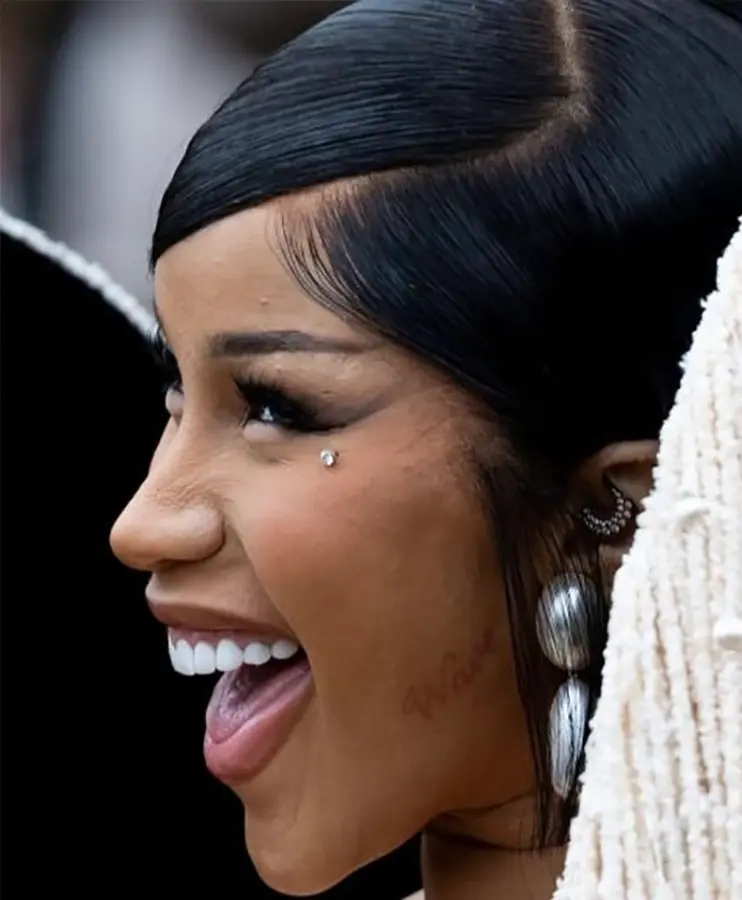
Cardi B has once again emerged victorious in her ongoing legal struggle against blogger Tasha K, as a federal judge issued a civil contempt order against the online personality for repeatedly violating a court-approved non-disparagement agreement. The ruling, filed on Tuesday, marks another significant chapter in the high-profile feud between the Grammy-winning rapper and the social media commentator.
Background of the Legal Feud
The conflict between Cardi B and Tasha K, whose legal name is Latasha Kebe, began several years ago when Tasha K produced and broadcast defamatory content alleging that Cardi B had used drugs, engaged in prostitution, and had sexually transmitted infections. Cardi B sued for defamation in 2019, and in January 2022, a jury in Georgia awarded Cardi B over $4 million in damages, including $1.3 million for loss of income and $1 million for reputation repair. Tasha K later filed for Chapter 11 bankruptcy, which halted the immediate collection of the judgment.
As part of the bankruptcy reorganization plan, a non-disparagement agreement was approved by the court in 2023. This agreement explicitly prohibited Tasha K from making any derogatory, disparaging, or defamatory statements about Cardi B, her family members, and other protected parties across all public platforms, including social media, podcasts, radio appearances, and live streams.
Violations of the Agreement
Despite the clear terms, Tasha K allegedly continued to post and broadcast content that violated the order. Cardi B's legal team filed a motion for civil contempt, citing multiple instances across YouTube, Instagram, TikTok, Facebook, X (formerly Twitter), and radio appearances. Court documents detailed specific posts and broadcasts where Tasha K referenced Cardi B in a negative light, sometimes directly calling out the rapper and her husband, Offset. The judge noted that the violations were not isolated but represented a pattern of disregard for the court's authority.
In her defense, Tasha K did not dispute making the statements identified in the motion. Instead, she argued that she retained the right to make such comments, claiming they were protected by her First Amendment rights. The court rejected this argument, emphasizing that the non-disparagement agreement was a binding contractual obligation that she voluntarily entered into as part of her bankruptcy case. The judge ruled that her statements fell squarely within the prohibited scope and that her justification did not absolve her of contempt.
Scope of the Order
The contempt order is broad and requires Tasha K to remove all content containing prohibited remarks from every platform she controls. She must also cease and desist from making any further disparaging statements about Cardi B, her estranged husband Offset (whose real name is Kiari Kendrell Cephus), and NFL player Stefon Diggs, who was also included as a protected party. The inclusion of Stefon Diggs is notable, as it suggests that the defamation campaign extended beyond Cardi B's immediate family.
Additionally, the court granted Cardi B's request for attorneys’ fees and related enforcement costs. The exact amount was not specified in the order but will be determined in subsequent proceedings. This financial penalty adds to the already substantial burden on Tasha K, who is still under bankruptcy protection.
Sanctions Against Tasha K's Attorney
In a separate but related development, the judge sanctioned Tasha K's attorney, Chad Van Horn, for legal citation issues raised during the proceedings. While the specifics of the citation problems were not detailed in the public order, such sanctions typically involve failures to properly cite legal authorities or misrepresentations of case law. This highlights the courtroom friction and the extent to which the legal battle has strained professional conduct.
Van Horn is a well-known bankruptcy attorney based in Florida, but his involvement in the defamation case has drawn scrutiny. The sanctions could affect his standing before the court and potentially impact Tasha K's defense strategy moving forward.
Implications for Online Commentary
This case serves as a powerful reminder that online personalities and bloggers are not immune from legal consequences when they engage in persistent defamation and violate court orders. First Amendment protections, while robust, do not shield individuals from voluntarily agreed-upon restrictions, especially in the context of bankruptcy settlements. The ruling reinforces the idea that courts will enforce non-disparagement clauses with concrete penalties, including contempt and financial sanctions.
For Cardi B, this victory is part of a larger pattern of taking legal action against those who spread harmful falsehoods. She has previously sued other social media figures and even a news outlet for defamation. Her willingness to pursue these cases sends a clear message that she will defend her reputation vigorously.
For Tasha K, the consequences continue to mount. Already saddled with a multi-million dollar judgment and bankruptcy proceedings, she now faces additional legal fees and the task of scrubbing years of content from her online presence. This could prove damaging to her brand and income, as much of her popularity stemmed from controversial gossip about celebrities.
Broader Context of Celebrity Defamation
The case is emblematic of the growing tension between free speech and personal protection in the digital age. Social media platforms allow instant dissemination of information—and misinformation—to massive audiences. When defamatory content goes viral, it can cause significant harm to a person's livelihood and mental health. Courts have increasingly become the arbiters of these disputes, balancing constitutional rights against the right to not be defamed.
Notably, Cardi B's legal team has been aggressive in using all available tools, including bankruptcy court, to enforce the original judgment. By incorporating non-disparagement terms into the reorganization plan, they ensured that any further attacks would be met with swift judicial action. This strategy could become a template for other celebrities facing similar online harassment.
However, critics argue that such agreements can stifle legitimate criticism and commentary, especially when they are used by public figures to silence negative opinions. But in this instance, the court found that Tasha K's statements crossed the line from opinion into defamation, and her subsequent violation of the agreement was clear and willful.
As the digital landscape evolves, more cases like this are likely to emerge. Content creators must understand that posting about public figures carries risks, particularly if the content is false and harmful. Likewise, public figures must navigate the fine line between protecting their reputation and suppressing free speech.
The order is now in effect, and Tasha K must comply within a timeframe set by the court. Failure to do so could result in further sanctions, including possible jail time for civil contempt. Cardi B's legal team will no doubt monitor compliance closely, ready to bring additional violations to the judge's attention.
This ruling is yet another victory for Cardi B in her quest to hold Tasha K accountable. It underscores the importance of adhering to court orders and the serious consequences that can follow when individuals choose to ignore them. For now, the ball is in Tasha K's court—literally and figuratively—as she must decide whether to finally cease her campaign or face even harsher penalties.
Source: Media Take Out News