

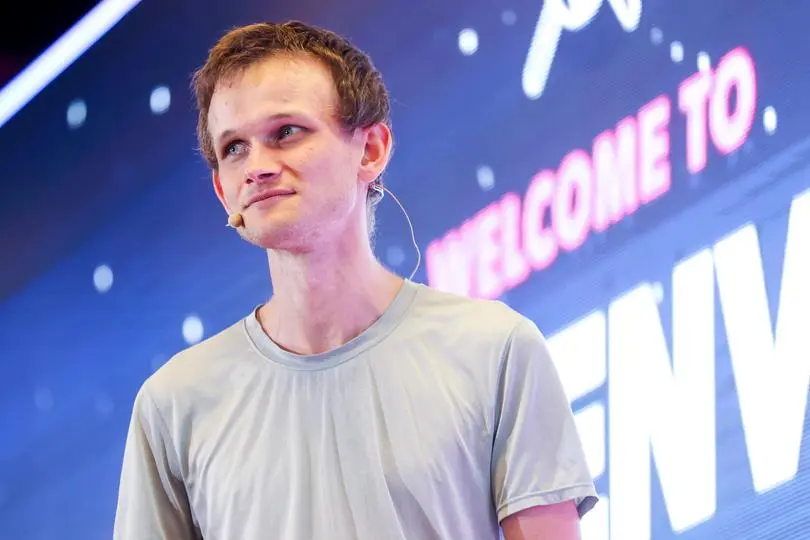
Ethereum co-founder Vitalik Buterin has published a new blog post arguing that artificial intelligence (AI) could play a transformative role in enhancing cybersecurity for the cryptocurrency industry. Specifically, Buterin advocates for AI-assisted 'formal verification' — a method that uses machine-checkable mathematical proofs to verify that software behaves exactly as intended. He believes this approach could become one of the most important tools for securing blockchain infrastructure, especially as AI itself makes it easier to discover bugs and vulnerabilities.
Buterin's thesis is nuanced: he acknowledges that AI will initially make software more vulnerable by automating the discovery of exploits. However, he argues that the same technology can be harnessed to create stronger defenses through formal verification. By pairing AI-generated code with rigorous mathematical verification, developers can build systems that are not only more resilient but also more trustworthy for critical applications like blockchains, cryptography, and other internet infrastructure.
The Growing Importance of Formal Verification
Formal verification is not a new concept. It has been used for decades in industries where software failure can have catastrophic consequences, such as aerospace, avionics, and medical devices. The process involves translating software specifications into a formal language and then using automated theorem provers or model checkers to prove that the code adheres to those specifications. Unlike traditional testing, which can only show the presence of bugs, formal verification can prove their absence for a given set of properties.
In the blockchain world, formal verification has already been employed to audit smart contracts, particularly those handling billions of dollars in decentralized finance (DeFi). For example, the Ethereum Foundation has supported research into formal methods for the Ethereum Virtual Machine, and several projects like Tezos and Cardano incorporate formal verification at the protocol level. Yet, adoption remains limited due to the high cost, complexity, and manual effort required. Buterin now sees AI as the key to making formal verification more accessible and scalable.
How AI Can Bridge the Gap
Buterin outlines several ways AI can assist formal verification. First, AI can help generate formal specifications from natural language descriptions or code comments, reducing the bottleneck of manual specification writing. Second, AI can automate the creation of proof assistants like Coq or Isabelle, which traditionally require expert users to manually guide the proof process. Third, AI can be used to discover invariants and properties that human verifiers might overlook, thereby increasing coverage.
“AI can also help with the 'last mile' of verification by generating human-readable explanations of why a proof holds, which builds trust among developers and auditors,” Buterin writes. He also notes that AI could help with regression testing: when code changes, AI can automatically re-verify the affected parts and suggest modifications to maintain correctness.
The Double-Edged Sword of AI in Security
Buterin is careful not to present a one-sided picture. He acknowledges that AI will make it easier for attackers to find and exploit vulnerabilities. Large language models (LLMs) can already be used to generate phishing emails, but more advanced models could analyze source code to locate zero-day exploits. In a world where AI-powered hacking becomes cheap and widely accessible, the only viable defense is to build software that is mathematically proven to be safe.
“If AI makes bug discovery 10 times easier, then we need verification to be at least 100 times more efficient to stay ahead,” Buterin argues. He points to historical parallels: the invention of the printing press made it easier to spread misinformation, but also enabled mass literacy and scientific progress. Similarly, AI may create new risks, but it also provides the tools to mitigate them — if we apply them wisely.
The Ethereum co-founder views formal verification as a “moat” that can protect crypto infrastructure from the coming wave of AI-driven attacks. He emphasizes that this is not just a theoretical exercise; practical steps are already underway. For instance, the Ethereum Foundation has been funding research into combining machine learning with formal methods, and several startups are exploring AI-auditing tools that incorporate verification.
Broader Implications for the Crypto Industry
Buterin's blog post arrives at a pivotal moment for the cryptocurrency industry. Trust in smart contracts and blockchain protocols has been eroded by high-profile hacks and exploits, such as the $600 million Poly Network attack and the $200 million Wormhole bridge hack. These incidents often stem from subtle coding errors that could have been caught by formal verification. As the industry matures, regulators and institutional investors are increasingly demanding provably secure software.
Moreover, the intersection of AI and crypto is a hot topic. AI agents are already being deployed on blockchains to automate trading, governance, and data management. If these agents operate with unverified code, the potential for catastrophic cascading failures grows. Buterin’s vision suggests a future where AI not only writes code but also mathematically guarantees its correctness, creating a self-sustaining cycle of trust.
Other industry leaders have echoed similar sentiments. Charles Hoskinson, founder of Cardano, has long championed formal verification as a core design principle. Meanwhile, projects like Chainlink and StarkWare are leveraging zero-knowledge proofs, which are a form of cryptographic verification, to ensure data integrity. Buterin’s proposal unifies these trends under a single AI-assisted umbrella.
Challenges and Criticisms
Despite the promise, there are significant challenges. Formal verification remains computationally intensive, and AI models themselves can have bugs or biases. Verifying a neural network that is used for verification creates a circular dependency. Buterin acknowledges these issues and suggests that a hybrid approach — where AI suggests proofs that are then checked by classical theorem provers — can avoid the “black box” problem.
Another challenge is education. Most blockchain developers are not trained in formal methods or proof assistants. Buterin believes AI can lower the barrier to entry by providing intuitive interfaces and automated guidance. He also calls for more investment in user-friendly tools and curriculum development.
Critics argue that AI-driven formal verification could lead to over-reliance on automated systems, potentially introducing new attack vectors if the AI itself is compromised. Buterin counters that by design, formal verification produces independently verifiable proofs that do not depend on the trustworthiness of the AI that generated them. The proof can be checked by any third party, ensuring transparency.
What This Means for the Future of Secure Computing
Buterin's blog post is not just about crypto; it has implications for all of cybersecurity. As AI continues to advance, the distinction between “attacker” and “defender” will blur. Formal verification offers a path to creating software that is inherently resistant to exploitation, regardless of how sophisticated the attack becomes. For industries like finance, healthcare, and critical infrastructure, this could be a game-changer.
In the crypto space specifically, Buterin's vision suggests that the next generation of blockchain protocols will be built with formal verification as a default, not an afterthought. This could lead to more robust DeFi platforms, safer bridges, and trustworthy oracles. It could also pave the way for regulatory clarity: if a protocol can mathematically prove its safety, regulators may be more willing to grant approvals.
Buterin ends his post not with a conclusion but with a call to action: “We have a window of opportunity to build the tools that will keep our digital infrastructure safe in an AI-driven world. Let’s not waste it.” The Ethereum co-founder’s message is clear: the future of secure computing lies not in fighting AI, but in leveraging it to create unbreakable proofs.
Source: Coindesk News