

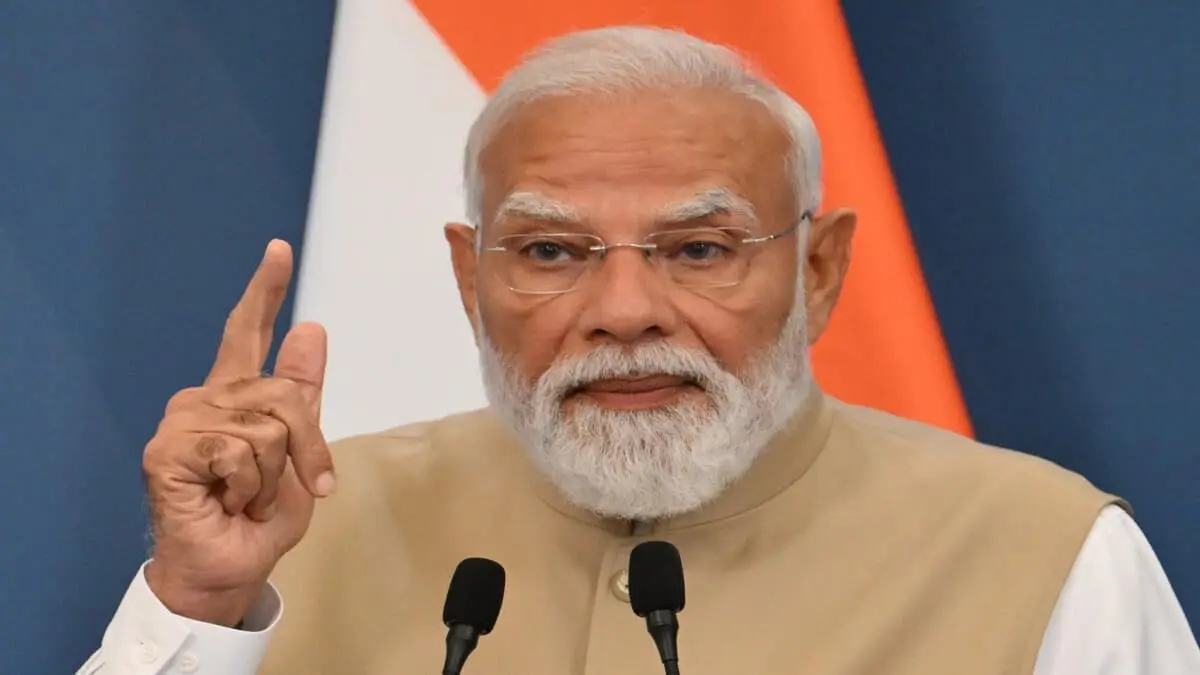
Prime Minister Narendra Modi's three-nation tour of Europe — covering Germany, France, and Italy — has been widely interpreted by trade experts and economists as a strategic recalibration of India's global economic posture. The visit, which took place between May 17 and May 22, 2026, was not merely a diplomatic formality but a carefully orchestrated effort to position India as an indispensable node in the evolving global supply chain network.
A New Trade Playbook
For years, India has sought to expand its economic footprint beyond traditional allies in the West. However, the post-pandemic geopolitical landscape, marked by the US-China trade tensions, Russia-Ukraine conflict, and the rise of economic nationalism, has compelled New Delhi to rethink its approach. Modi’s Europe tour represents a departure from the earlier bilateral-centric model to a more integrated, multi-sectoral engagement. Experts note that the agreements and memoranda of understanding (MoUs) signed during the tour cover areas as diverse as semiconductors, electric vehicles, green hydrogen, defense manufacturing, and digital infrastructure.
“The old playbook of merely signing trade agreements is outdated,” said Dr. Arvind Gupta, a professor of international relations and former diplomat. “Modi’s visit shows that India is now looking to co-create supply chains with Europe, rather than just export raw materials or import finished goods. This is a fundamental shift.”
Germany: The Engine of Industrial Cooperation
In Berlin, Modi met with Chancellor Friedrich Merz and a delegation of German CEOs from companies like Siemens, Volkswagen, and Bosch. The two leaders announced the formation of a “Strategic Partnership for Resilient Supply Chains.” This initiative aims to reduce dependence on China for critical components, particularly in the automotive and electronics sectors. Germany committed to invest €15 billion in India over the next five years, focusing on R&D centers and manufacturing plants.
“Germany’s interest in India is not accidental,” explained Anurag Singh, a trade analyst at the Indian Council for Research on International Economic Relations. “With Europe’s industrial giants looking to de-risk from China, India offers a stable democracy, a large skilled workforce, and a growing domestic market. The German investment is a vote of confidence.”
A key highlight was the agreement on semiconductors. India’s fledgling chip ecosystem received a boost as German chipmaker Infineon announced plans to set up a design center in Bengaluru. Additionally, the two countries agreed on a joint roadmap for green hydrogen, with Germany pledging technology transfer for electrolyzer manufacturing.
France: Defense and Nuclear Energy
In Paris, Modi and President Emmanuel Macron discussed deepening cooperation in defense, space, and civil nuclear energy. The two leaders inked a €7.6 billion deal for the purchase of 26 Rafale Marine fighter jets for the Indian Navy, a move that will bolster India’s maritime capabilities in the Indian Ocean Region (IOR). Moreover, France agreed to collaborate on India’s nuclear submarine program, sharing technology for propulsion systems.
But the most significant outcome was the announcement of a “Indo-French Partnership for Digital Public Infrastructure.” This will see France adopt India’s UPI (Unified Payments Interface) and Aadhaar-like systems for its public service delivery. Macron praised India’s governance model as “a template for the developing world.”
Experts believe that the digital partnership will create new opportunities for Indian fintech companies to expand into Europe. “UPI is already a global success story. With France as a gateway, Indian digital payment firms can now target the entire European market,” noted Priya Sharma, a digital economy specialist.
Italy: Mediterranean Gateway and Logistics Hub
The final leg of the tour was Italy, where Modi met with Prime Minister Giorgia Meloni. Italy is India’s third-largest trading partner in the EU, and the visit aimed to turn that relationship into a strategic logistics partnership. The two countries signed an agreement to develop a “Special Economic Zone (SEZ) for Spice and Pharma Logistics” at the Port of Trieste, giving Indian exporters a direct entry point into Southern Europe.
“Trieste is the gateway to the Mediterranean, and through it to Africa and Latin America. This SEZ will dramatically cut transit times for Indian pharmaceutical and textile exports,” explained Francesca Rossi, a trade economist from the University of Bologna. Currently, Indian goods take about 30 days to reach European markets via Rotterdam; using Trieste could reduce that to 15 days.
Additionally, Italy agreed to support India’s bid for the Indo-Pacific Economic Framework (IPEF) cooperation, ensuring that supply chain resilience includes both countries. The two also signed a cultural exchange pact and an agreement on maritime security in the Indian Ocean.
Supply-Chain Diversification: Key Theme
Throughout the tour, the theme of supply-chain resilience was pervasive. The COVID-19 pandemic and subsequent disruptions exposed the fragility of global supply chains concentrated in China. India has long sought to attract manufacturers looking for an alternative base, but limited infrastructure and complex regulations have been hurdles.
Modi’s message in Europe was clear: India is not just a destination for low-cost manufacturing but a partner in creating reliable, transparent, and secure supply chains. To back this, he pointed to recent reforms—corporate tax cuts, production-linked incentive (PLI) schemes, and the National Logistics Policy—which have improved India’s ease of doing business ranking.
Expert Reactions and Critical Views
While many experts have welcomed the tour’s outcomes, some have struck a cautious note. Dr. Meenakshi Sood, a professor at the Indian Institute of Foreign Trade, warned that execution is key. “India has signed numerous agreements in the past that have not moved beyond the paper stage. The real test will be implementation, especially in areas like land acquisition, labor laws, and state-level bureaucracy.”
She also pointed to the absence of a comprehensive free trade agreement (FTA) with the EU as a missing piece. “Modi’s tour created a positive atmosphere, but the EU-India FTA has been stalled for over a decade. Without tariff reductions, many of these supply-chain initiatives will remain fragmented,” she argued.
Others, like former commerce secretary Rakesh Ranjan, see the glass as half full. “The tour signals a recognition in Europe that India is a critical partner. The quantum of investment and technology transfer announced is unprecedented. If India can absorb these, it will be transformative.”
Broader Strategic Implications
The Europe tour also dovetails with India’s broader foreign policy objectives. By strengthening ties with Europe, New Delhi is hedging against overdependence on any one power—whether the US, Russia, or China. It reinforces India’s status as a “swing state” in global geopolitics.
In the context of the Iran-Israel conflict and the Ebola outbreak affecting Africa, India’s stable governance and healthcare infrastructure offer additional appeal. The tour also coincided with India’s efforts to secure a permanent seat on a reformed UN Security Council, with both France and Germany reiterating their support.
Furthermore, the visit has potential ripple effects on regional dynamics. For instance, the joint statement on the Indo-Pacific, issued with Italy, underscored the importance of freedom of navigation and respect for international law—an implicit reference to China’s assertiveness in the South China Sea. India and Europe now have a converging strategic outlook on the region.
Way Forward
As the Prime Minister returns to New Delhi, the focus will shift to follow-up actions. Ministries will need to set up joint working groups with each country to track progress on signed MoUs. The Commerce Ministry is expected to release a detailed roadmap for implementing the supply-chain partnership with Germany by September 2026.
Meanwhile, Indian industry bodies like CII and FICCI have been tasked with identifying sectors where immediate investments can be made. The PLI schemes, particularly for electronics and automobiles, are expected to see a surge in applications from European firms.
In a statement after the tour, the Ministry of External Affairs said: “This visit has reset the India-Europe economic partnership. We are not just looking at trade numbers but reconfiguring global supply chains with India at the center.”
The true test, however, will be whether these ambitious plans translate into jobs, growth, and enhanced competitiveness for Indian industry. The next 12 months will be crucial in determining whether Modi’s Europe tour becomes a historic turning point or merely another diplomatic highlight.
Source: Firstpost News